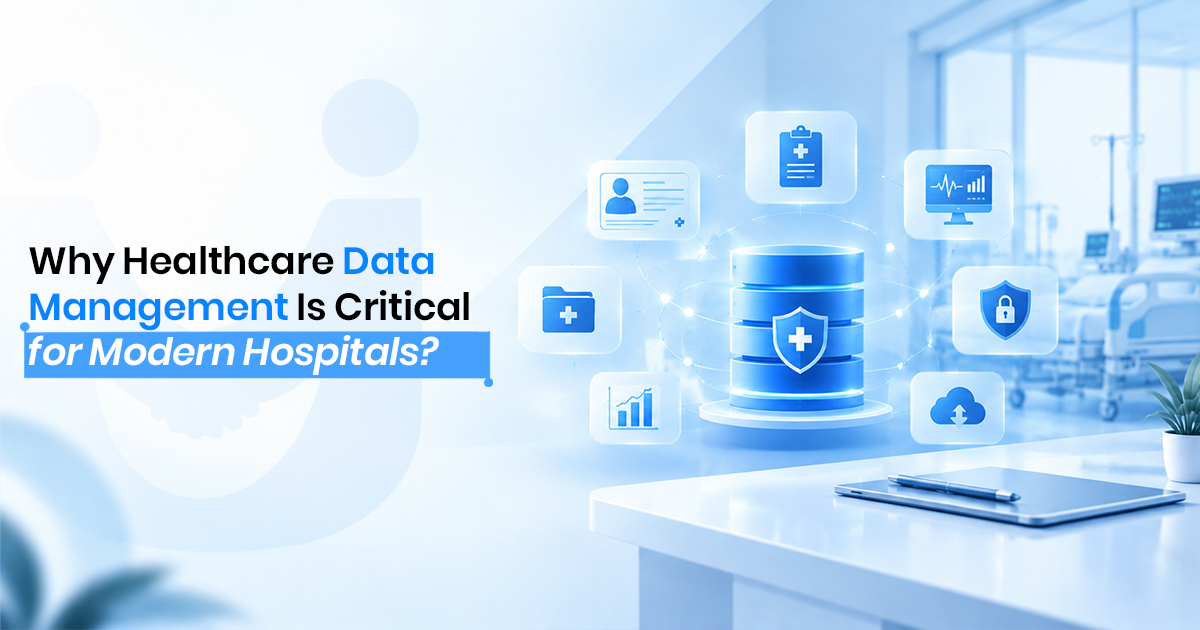
Modern hospitals generate and manage huge amounts of information and data every day. From patient registration and medical histories to diagnostic reports, prescriptions, billing records, and insurance information, every stage of the healthcare journey depends on accurate and accessible data. As healthcare becomes increasingly digital, effective healthcare data management has become essential for hospitals seeking to improve efficiency, support better decisions, and deliver quality patient care.
Poorly managed information can result in duplicate records, delays, inaccurate reporting, and difficulty accessing critical patient information. A structured and smart approach is required to manage healthcare information that helps hospitals address these challenges, while creating a more connected health environment.
What Is Healthcare Data Management?
Healthcare data management means to collect, organise, secure and maintain healthcare information throughout its lifecycle. It includes clinical, financial, operational and administrative data that is generated from different departments of the hospital.
An effective hospital data management ensures that correct and relevant information is available to authorized users whenever it is required. It also helps organisations to maintain quality, reduce duplication, minimize errors and establish consistent processes for managing the information.
With hospitals increasingly adopting digital platforms, healthcare data management systems have become an important part of modern healthcare infrastructure.
1. Improves Patient Care
For effective healthcare delivery, accurate and relevant information is essential. Doctors, administrators, patients and other stakeholders need access to relevant platforms and portals to function. They need access to medical histories, diagnostic reports, prescriptions, invoices, etc. to make informed decisions on time.
Authorized healthcare professionals will have access to important information if the data is well organised and structured. This will help the hospital to reduce delays, support better clinical operations and decisions.
2. Reduces Data Duplication and Errors
Hospitals handle information across multiple departments, systems and software. Without standardized and centralised processes, there are chances that the same patient may have multiple records in the form of prescription, reports and bills. The information could be inconsistent across different databases.
A centralized platform in a hospital can avoid many issues and challenges. It can reduce unnecessary duplication, data loss, inaccuracy and improve data consistency. Automated validation and standardized data-entry processes can further reduce the risk of manual errors. Better data quality ultimately supports more reliable clinical and administrative operations.
3. Strengthens Healthcare Data Security
Hospital information is highly crucial and sensitive. It requires strong protection against unauthorised access, loss or misuse. As more and more healthcare information becomes digital, it becomes crucial to protect it.
Hospitals can use access controls, authentication mechanisms, encryption, audit trails, and other security measures to protect sensitive information. Role-based access can ensure that employees only access the information required for their responsibilities.
Strong security practices can help hospitals protect patient privacy while supporting compliance with applicable regulations and organizational policies.
4. Enables Faster Access to Information
The hospital environment is busy, healthcare professionals need information quickly. Searching through paper records or disconnected systems can consume valuable time and may delay the treatment.
Smart digital systems can organize patient information in a structured format, allowing authorized users to retrieve records more efficiently. Digital health records can also make information easier to share between relevant departments, supporting smoother coordination throughout the patient journey.
Faster access to information can improve operational efficiency while reducing unnecessary administrative work.
5. Supports Better Decision-Making
Healthcare organizations need accurate and relevant data not only for patient care but also for keeping the records for operational purposes. Hospital administrators use information to monitor patient volumes, resource utilization, departmental performance, inventory, and other operational indicators.
Effective healthcare information management can consolidate data from different areas and make it easier to analyze. Dashboards and reports can help hospital leaders identify trends, monitor performance, and make more informed decisions.
Data-driven decision-making can also help hospitals identify operational bottlenecks, delays and opportunities for improvement (if there are any).
6. Improves Interdepartmental Coordination
Hospitals function through the collaboration of multiple departments, including registration, laboratories, radiology, pharmacy, billing, nursing, and clinical services. It becomes more important for these departments to work together to avoid any errors or delays. Communication gaps may give rise to poor patient experience or may impact the revenue.
Integrated healthcare management systems connect information across different workflows that contributes to smoother workflows and a more connected hospital environment.
7. Creates a Foundation for Digital Healthcare
Healthcare organizations are increasingly adopting technologies such as automation, analytics, cloud platforms, and connected healthcare applications. However, these technologies depend on reliable and well-structured data.
Strong healthcare data management provides the foundation required to use these technologies effectively. Clean, accessible, and secure data can support automation, analytics, digital services, and future healthcare innovations.
Building a Data-Driven Hospital
Data management is no longer simply an IT responsibility. For now any business or organisation, it has become a priority that affects clinical care, patient experience, administrative efficiency, and security.
Hospitals should establish clear data governance practices, standardize information across departments. They should implement secure digital systems and should make a practice of regularly reviewing the data quality. If found irrelevant or incorrect, they should act upon it in a structured way. Employees and other staff members should also be trained to follow the best practices of data handling. As the healthcare sector continues to become more digital, hospitals and businesses should know how to manage and respond to the growing needs of patients.
Healthcare management is about making the right information available at the right time. Right people, who are directly involved in providing and defining the patient experience should be available with the correct information while still maintaining its privacy and security. By putting money in the right technology for data management, secure systems, and effective healthcare information management, hospitals can build a stronger foundation.