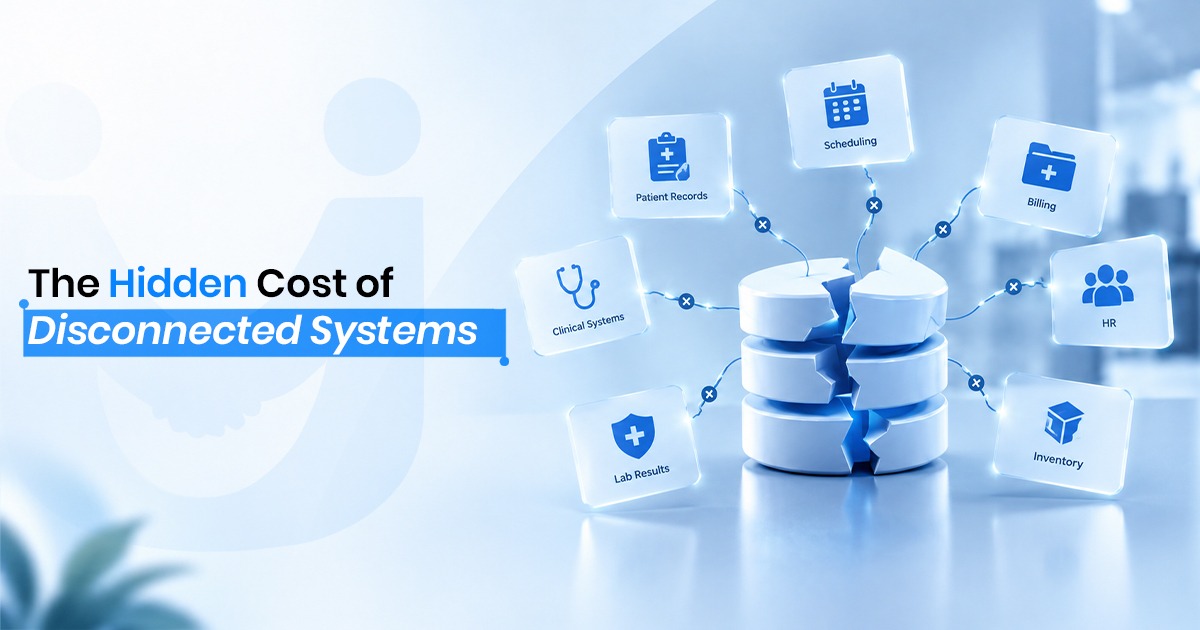
In today’s digital business environment, organisations are dependent on multiple systems to manage their daily operations such as data, communication, and customer interactions etc. Yet having more technology does not necessarily mean having a more connected business.
When applications, teams, and processes operate independently, organisations can develop data silos that make information difficult to access, share, and act upon. These disconnected systems may not always create visible problems immediately, but over time, they can become a significant source of business inefficiency.
When Technology Works in Silos
A disconnected system can affect the operation of any organisation. It is a technical issue which needs to be addressed immediately. Daily operations and tasks need to be monitored closely which cannot be possible with disconnected systems.
There are organisations which are using different systems and platforms for different departments to work and communicate with their team members. Hence, there is a high chance of data duplication, errors, and delays. This creates digital silos where valuable data exists, but remains isolated from the people and processes that need it.
For example, a customer interaction recorded in one system may not be visible to another team using a different platform. There is a possibility that the customer might not be comfortable explaining the issues again and again. This can lead to bad customer experience. Here a single well connected platform would have made the lives of the employee and customer easier.
Each gap may appear small. Collectively, they can slow down decision-making and increase operational complexity.
The Real Cost of Disconnected Systems
The hidden cost of disconnected systems is not limited to software or infrastructure. The higher cost often comes from the time, effort, and resources required to work around them.
Employees spend valuable time entering the same information into multiple platforms. Teams may rely on spreadsheets, emails, and manual communication to bridge gaps between systems. Decision-makers may struggle to access a complete and current view of operations.
Over time, these challenges can contribute to business inefficiency, inconsistent information, slower workflows, and a greater risk of errors.
Disconnected systems can also make it difficult for organisations to scale. As businesses grow, adding more applications without considering how they will interact can create increasingly fragmented systems.
More technology can therefore create more complexity instead of greater efficiency.
Integration Is More Than Connecting Software
Integrating Systems is often looked at as a technical exercise. But its impact stays far and beyond the technology. It is a one time effort which can give greater impact in future. It is a sustainable move.
Effective integration connects systems, processes, and information so that they can work together as part of a larger operational ecosystem. Instead of employees constantly moving information from one platform to another, integrated systems can allow data to flow more seamlessly between relevant functions.
This creates greater visibility across the organisation and helps teams work with more consistent information.
However, integration should not simply mean connecting every application to every other application. Organisations need to understand their workflows, identify critical information gaps, and determine which systems need to communicate with each other.
The goal is not more connections. The goal is better-connected operations.
Moving Towards Integrated Systems
Building integrated systems can help organisations move from fragmented processes towards a more connected way of working.
This begins with identifying existing digital silos and understanding where they create friction. Organisations can then prioritise integration around processes that have the greatest operational impact.
A connected technology environment can support smoother workflows, improve access to information, reduce repetitive work, and give leaders greater visibility into business performance.
At IUI Solutions, we believe digital transformation is not simply about adopting more technology. It is about creating connected ecosystems where technology, people, data, and processes work together with purpose.
The hidden cost of disconnected systems is ultimately the cost of lost time, limited visibility, and missed opportunities.
The future of efficient organisations will not be defined by how many systems they use, but by how effectively those systems work together.