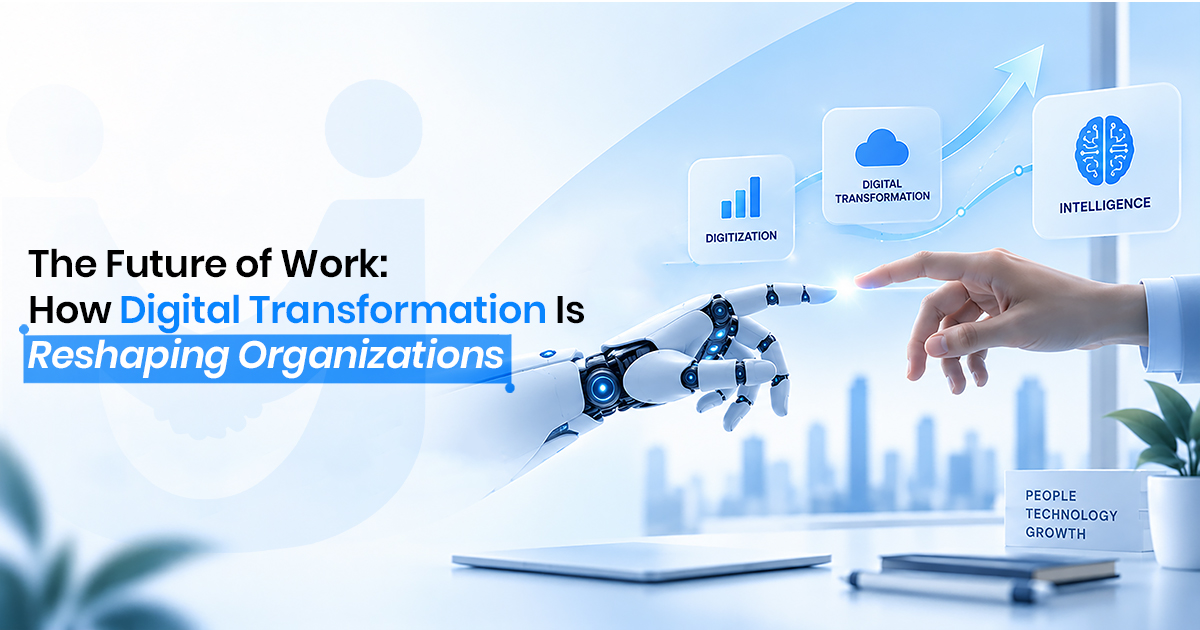
The way people work has changed significantly in recent years. Technology has moved from being a support function to becoming an important part of how organisations communicate, collaborate, manage operations, and serve customers. As businesses continue to adopt new technologies, the connection between digital transformation and the future of work is becoming increasingly important.
The future of work is not simply about working remotely or using more digital tools. It is about creating organisations that are more flexible, connected, efficient, and capable of adapting to changing business needs.
The Rise of the Digital Workplace
A modern digital workplace brings together the tools employees need to communicate, collaborate, access information, and complete their responsibilities. Cloud platforms, collaboration tools, digital workflows, and business applications allow employees to work across locations while remaining connected.
For organisations, this can reduce dependency on physical infrastructure and make collaboration easier. For employees, it can provide greater flexibility and easier access to the information and resources they need.
Workplace Transformation Is Becoming Continuous
Traditionally, organizations introduced technology through individual projects or software implementations. Today, workplace transformation is becoming a continuous process.
Businesses are regularly evaluating how employees work and identifying opportunities to simplify processes, automate repetitive activities, and improve collaboration. Rather than treating transformation as a one-time initiative, organisations are increasingly viewing it as an ongoing effort to improve how work gets done.
Remote Work Technology Is Changing Collaboration
Remote and hybrid work have made digital collaboration an essential part of modern organisations. Remote work technology allows employees to communicate, conduct meetings, share documents, manage projects, and collaborate regardless of their physical location.
However, effective remote work requires more than video conferencing. Organisations need connected systems, clear digital processes, secure access, and communication practices that help employees stay engaged and productive.
The result is a workplace where productivity is increasingly based on outcomes rather than physical presence.
Automation Will Redefine Everyday Work
Automation is another major factor shaping the future of work. Many employees spend significant amounts of time on repetitive activities such as data entry, scheduling, reporting, documentation, and routine communication.
Digital tools can automate suitable processes, allowing employees to spend more time on activities that require creativity, problem-solving, decision-making, and human interaction.
The objective is not necessarily to replace employees but to reduce unnecessary manual effort and help people focus on higher-value work.
Employee Experience Will Become a Priority
Organisations are increasingly recognising that technology directly affects how employees experience their workplace. Complicated processes, disconnected applications, and difficult-to-use systems can create frustration and reduce productivity.
This is driving greater interest in employee experience technology. Organisations are looking for solutions that make everyday tasks easier, provide quick access to information, and reduce friction across employee workflows.
A better digital experience can contribute to employee satisfaction while supporting organisational efficiency.
Digital Workplace Solutions Will Become More Connected
As organisations adopt more digital tools, integration will become increasingly important. Employees should not have to switch between numerous disconnected platforms to complete a single task.
Modern digital workplace solutions can bring different applications, workflows, communication channels, and information sources together. Connected systems can reduce duplication, improve information flow, and create more consistent processes across departments.
This connectivity will be particularly important as organisations continue to expand their digital infrastructure.
Skills Will Matter as Much as Technology
Technology alone cannot create the workplace of the future. Employees need the skills and confidence to use new systems effectively.
Organisations will need to invest in digital skills, continuous learning, and change management. Employees who can adapt to new tools and evolving workflows will become increasingly valuable.
At the same time, organisations will need to create a culture where employees are encouraged to learn, experiment, and adapt rather than resist every change.
What Will the Future of Work Look Like?
The future workplace is likely to be more flexible, connected, and technology-enabled. Employees may work across offices, homes, and other locations while relying on digital platforms to stay connected. Automation will handle more routine processes, while people will focus on judgment, creativity, relationships, and strategic thinking.
However, successful transformation will depend on finding the right balance between technology and people. Businesses that focus only on implementing new tools may struggle to achieve meaningful results.
The real opportunity lies in using technology to create better ways of working.
Conclusion
The relationship between digital transformation and the future of work will continue to evolve as technology and employee expectations change. Organisations that embrace flexible working models, connected digital systems, automation, and employee-focused technology can build workplaces that are better prepared for the future.
Ultimately, the future of work is not about creating a workplace dominated by technology. It is about using technology thoughtfully to help people work smarter, collaborate better, and create greater value.